
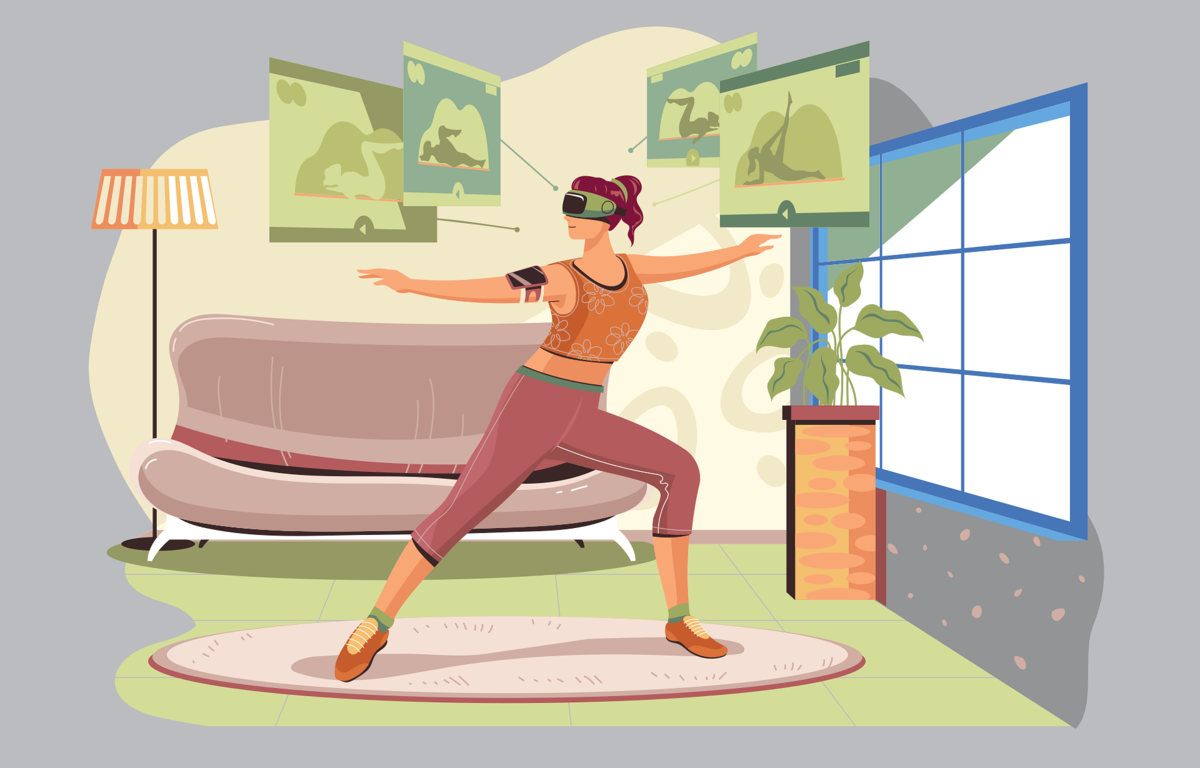
For the community at Zudeals.com, where innovation meets lifestyle efficiency, understanding this shift is key. We are witnessing the democratization of tranquility. You no longer need a plane ticket to Bali or a week off work to experience a deep meditative state. The sanctuary is now located in your living room, powered by advanced VR (Virtual Reality) and AI-driven wellness protocols.
The Evolution of Mindfulness: From Apps to Immersion
For over a decade, mindfulness was "flat." We used smartphone apps that provided guided audio, which was a significant step forward, but it required the user to do the heavy lifting of visualization while sitting in a potentially distracting environment.
In 2026, Spatial Wellness has taken over. Virtual Reality meditation doesn't just ask you to imagine a peaceful beach; it places you there with 360-degree visual fidelity, spatial audio that mimics the movement of the wind, and even haptic feedback that simulates the gentle vibration of a "singing bowl." This immersion triggers the brain’s parasympathetic nervous system much faster than traditional methods, making it the perfect tool for the time-crunched modern professional.
Why VR Meditation is 2026’s Ultimate Morning Routine
The morning routine is the most competitive space in the self-improvement industry. In 2026, VR has won this space for four primary reasons:
1. Neural Entrainment and Sensory Deprivation
Modern homes are full of "sensory noise"—the hum of the refrigerator, the light from the street, or the mental clutter of a messy room. VR headsets act as a total sensory deprivation chamber. By replacing your messy physical reality with a pristine digital landscape, the brain enters a "Flow State" almost instantly. Advanced 2026 headsets also utilize Neural Entrainment, using specific light frequencies and binaural beats to move brainwaves from high-stress Beta states to calm Alpha or deep-meditation Theta states within minutes.
2. The Rise of "Bio-Reactive" Environments
The virtual retreats of 2026 are not static videos. They are Bio-Reactive. Through integration with smartwatches and rings, the VR environment responds to your physiological data in real-time.
Heart Rate Sync: If the system detects your heart rate is high, the "virtual sunset" may slow down, or the colors of the forest may shift to cooler, more calming blues and greens.
Breath Awareness: Using the microphone and internal sensors, the VR assistant can visualize your breath as a glowing mist, helping you master rhythmic breathing through visual cues.
3. Infinite Variety Without the "Travel Fatigue"
One morning you can meditate on the peak of Mount Everest; the next, you can be floating in a bioluminescent ocean on a fictional planet. This variety prevents "habituation"—the psychological phenomenon where a routine becomes boring and less effective over time. For the Zudeals user who values choice, the ability to switch between a Zen garden and a cosmic nebula keeps the wellness practice fresh and exciting.
4. AI-Powered Personal Zen Masters
In 2026, your VR retreat includes an AI guide that knows your history. It isn't just a recorded voice; it is a generative intelligence that remembers you had a stressful meeting yesterday and adjusts this morning's session to focus on "resilience" and "letting go." It provides a level of personalization that was previously only available through expensive 1-on-1 private coaching.
The Anatomy of a Home-Based Virtual Retreat
A typical "Virtual Wellness Retreat" in 2026 isn't just a 10-minute session; it’s a structured experience designed to optimize the user for the day ahead.
Phase 1: The Transition (Minutes 1-5)
The user enters a "Lobby" or "Personal Sanctuary"—a customizable digital room. Here, the AI scans the user's sleep data from the night before and recommends a specific "Environment Path."
Phase 2: Deep Immersion (Minutes 5-15)
The user is transported to the main environment. In 2026, Volumetric Capture technology makes these environments look indistinguishable from reality. Whether it is the sound of a specific waterfall in Iceland or the light hitting the red rocks of Sedona, the fidelity is absolute.
Phase 3: Active Mindfulness (Minutes 15-20)
Unlike old meditation, VR allows for "Active Zen." Users might engage in slow, Tai-Chi-like movements where they interact with digital energy or "paint" in the air with their breath. This bridges the gap between sitting still and the movement required in the real world.
Market Trends: Why Now?
The surge in Virtual Wellness is driven by a massive shift in hardware and software accessibility:
| Feature | 2022 Technology | 2026 Technology |
|---|---|---|
| Weight | 500g+ (Bulky) | 150g-200g (Goggles style) |
| Resolution | 2K per eye | 8K+ (Retina Level) |
| Connectivity | Wired or Wi-Fi 6 | 6G / Satellite Edge Computing |
| Battery Life | 2 Hours | 8 Hours + Wireless Charging |
| Price Point | Luxury/Gaming Price | Consumer Appliance Price |
The "Wellness-First" headset market has outpaced the "Gaming-First" market for the first time this year. Companies are now designing hardware specifically for comfort while lying down or sitting in a lotus position, featuring soft-fabric straps and breathable face interfaces.
The Economic Logic: Cost-Benefit for Zudeals Readers
For the value-conscious urbanite, the math is simple. A traditional 3-day wellness retreat can cost anywhere from $1,500 to $5,000 when including travel, lodging, and fees.
A high-end VR setup in 2026, combined with a premium wellness subscription, costs a fraction of that and provides 365 days of access. When viewed as a "Per-Use" investment, Virtual Wellness is one of the most cost-effective ways to manage mental health and productivity in the modern era. It is the ultimate "deal" for long-term health.
Social Connection in Virtual Spaces
While often viewed as a solitary activity, 2026 has seen the rise of Sangha Spaces—communal virtual meditation halls. Users can join "Live Retreats" where they see the glowing silhouettes of hundreds of other people meditating simultaneously across the globe. This provides the "collective effervescence" of a real-life retreat—that feeling of being part of something larger—without the logistical nightmare of group travel.
Overcoming the Skeptics: Is it "Real"?
The most common criticism of VR wellness is that it is "artificial." However, in 2026, clinical studies have shown that the brain’s response to a VR forest is nearly identical to its response to a real forest in terms of cortisol reduction and dopamine release. While it doesn't replace the need for actual nature, it serves as a powerful "Nature Supplement" for those living in dense urban environments where a forest is not easily accessible at 6:00 AM on a Tuesday.
Conclusion: The Future of the Morning
The rise of home-based VR meditation is a symptom of a broader 2026 trend: the "Internalization of Luxury." We no longer seek status through external travel alone; we seek it through the mastery of our own internal states.
As we move further into the decade, the Virtual Wellness Retreat will become as common as the morning cup of coffee. It is an essential tool for anyone looking to navigate the complexities of the 21st century with grace, focus, and a sense of deep-seated peace.
At Zudeals.com, we believe the best investments are those that pay dividends in your quality of life. VR meditation is not just a gadget; it is a gateway to a better version of yourself.


