
In 2026, the architectural foundation of the internet is undergoing a massive migration. For the last decade, our digital lives were governed by "The Cloud"—massive, centralized data centers located in remote regions, often hundreds of miles away from the end-user. While these hubs provided immense storage and power, they introduced a fundamental flaw in the age of real-time interaction: Latency.
At Zudeals.com, we monitor the high-utility shifts that redefine how businesses and individuals harness technology. We have officially reached the era of Edge-as-a-Service (EaaS). This represents the definitive shift from centralized "Mega-Hubs" to a decentralized, hyper-local processing model. In 2026, the "brain" of the internet has moved out of the distant desert and into the street lamps, cell towers, and retail basements of our local neighborhoods.
The 2026 Shift: Why Centralization Hit a Wall
The move to Edge-as-a-Service was driven by the "Real-Time Imperative." In 2024 and 2025, the explosion of Generative AI, autonomous drones, and augmented reality (AR) pushed centralized cloud infrastructure to its breaking point.
1. The Speed of Light Problem
No matter how fast a fiber-optic cable is, the speed of light is constant. Sending a request from a smartphone in Ho Chi Minh City to a server in Virginia and back takes roughly 150 to 200 milliseconds. In 2026, for a self-driving car or a remote robotic surgeon, 200 milliseconds is a lifetime. EaaS solves this by placing compute power within 1 to 5 miles of the user, dropping latency to under 5 milliseconds.
2. The Data Gravity Crisis
In 2026, we are generating more data than the backbone of the internet can carry. High-definition security cameras, IoT industrial sensors, and 8K VR streams create "Data Gravity"—they are too heavy to move to a central cloud. EaaS allows for Processing at Source, where data is analyzed locally, and only the essential insights are sent back to the main hub.
4 Pillars of the Edge-as-a-Service Revolution
The 2026 decentralized landscape is built on four fundamental technologies that have made "Hyper-Local" the new corporate standard.
1. Micro-Data Centers (The "Invisible" Infrastructure)
In 2026, you don't see data centers; you live among them.
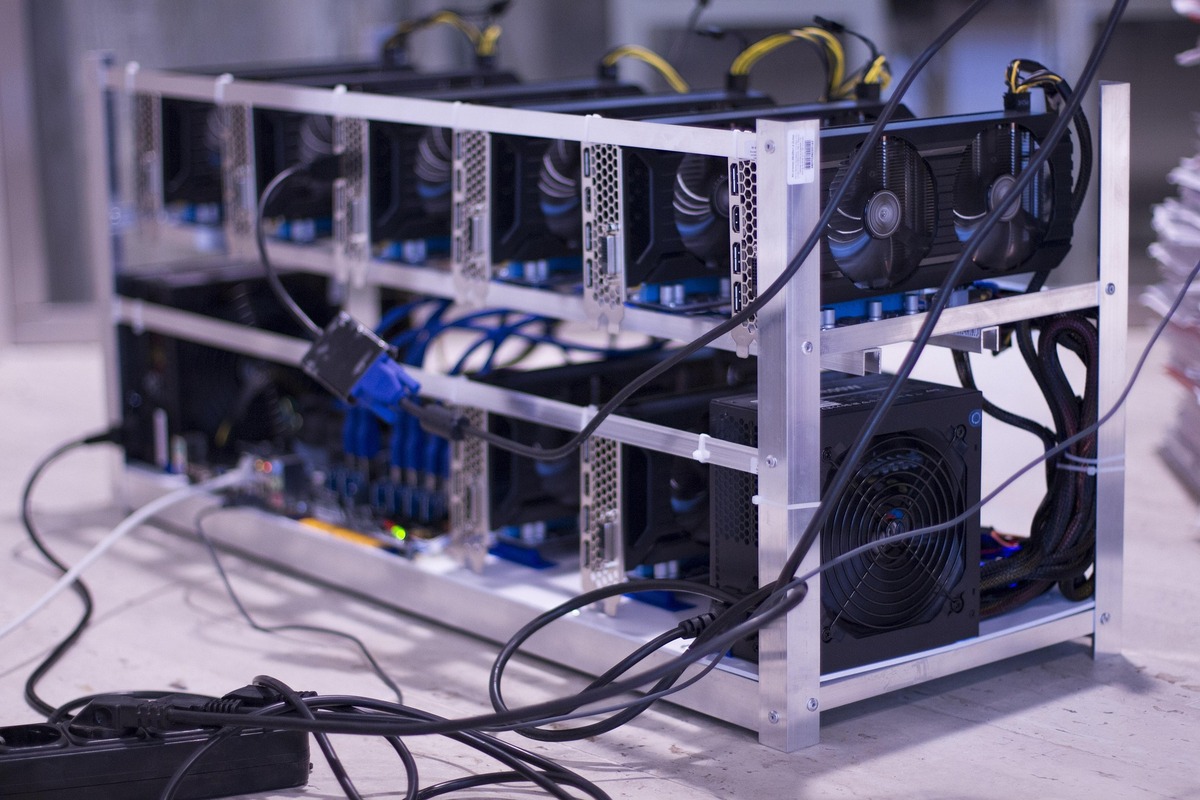
The Tech: EaaS providers utilize Modular Micro-Nodes—ruggedized, liquid-cooled server boxes the size of a refrigerator. These are tucked into 5G base stations, EV charging hubs, and even underneath city sidewalks.
The Result: This "Ambient Compute" layer ensures that every city block has the processing power of a mid-sized 2020-era server farm.
2. Multi-Access Edge Computing (MEC) Integration
EaaS is inseparable from the 6G and 5G Advanced networks of 2026.
The Integration: Telco providers have evolved into EaaS giants. They no longer just sell "data plans"; they sell "Compute Slices." A developer can rent a specific "slice" of the cell tower’s processor to run an AI-powered translation service specifically for the people within that tower's radius.
3. Edge-Native AI (The "Small Model" Boom)
One of the biggest 2026 breakthroughs is the shift from "Giant LLMs" to Edge-Optimized Agents.
The Optimization: Instead of running a 1-trillion parameter model in the cloud, EaaS uses 3B to 7B parameter models that are hyper-specialized for local tasks. These models are "cached" at the edge, allowing for instantaneous voice interaction and visual recognition without a satellite link.
4. Sovereign Edge Mesh (Decentralized Security)
EaaS has solved the "Central Point of Failure" risk.
The Security: In 2026, decentralized hubs operate in a Mesh Network. If one local node is compromised or goes offline, the surrounding nodes automatically "re-route" the compute load. This creates a resilient, "un-hackable" infrastructure that is far more secure than a single, massive target in the desert.
The ROI: Why EaaS is the Ultimate "Zudeal" for 2026
At Zudeals.com, we analyze the Cost of Bandwidth vs. the Cost of Compute. In 2026, EaaS is the most efficient way to scale.
| Metric | Centralized Cloud (Legacy) | Edge-as-a-Service (2026) |
|---|---|---|
| Network Latency | 50ms - 200ms | < 5ms (Instant) |
| Bandwidth Costs | High (Heavy data backhaul) | Minimal (Local Filtering) |
| Privacy / Security | Centralized Risk | Distributed / Sovereign |
| Scalability | Slow (Hardware lead times) | Instant (On-demand Micro-nodes) |
| Reliability | Dependent on long-haul fiber | Local Mesh Resilience |
The "Experience" Dividend
In 2026, "Performance" is a product feature. Companies using EaaS for their applications are seeing 40% higher user retention because their apps feel "faster than thought." When the UI reacts instantly to a gesture or a voice command, the "Digital Friction" vanishes, leading to higher conversion rates and brand loyalty.
2026 Market Leaders: Who is Hosting the Edge?
| Provider | Role | 2026 Tech Highlight |
|---|---|---|
| Cloudflare / Akamai | The "Edge Fabric" | Turning their CDN networks into full-stack EaaS platforms. |
| Voda-Verizon / Viettel | The Telco Edge | Deploying NPU-integrated server blades in every 5G tower. |
| Amazon (AWS Wavelength) | The Hybrid Bridge | Seamlessly moving workloads between Local Zones and Central Regions. |
| StackPath / EdgeGap | The Gaming Edge | Providing "Zero-Lag" environments for global 3D multiplayer. |
3 Pillars of Implementing an EaaS Strategy
If you are a CTO or a product developer in 2026, your move to the "Hyper-Local" should follow these three standards:
1. Adopt an "Edge-First" Architecture
Stop designing apps that assume a perfect, fast connection to a central server. In 2026, the "Zudeal" is to build Edge-First. Your application logic should live at the edge node, using the central cloud only as a "cold storage" archive for long-term data. This ensures your app remains functional and fast even during regional internet outages.
2. Implement "Contextual Caching"
The secret to EaaS is knowing which data to put where. Use AI to predict which assets (như localized AI models, 3D assets, or regional data) will be needed in specific neighborhoods. A retail app in a shopping mall should have different "Edge-Caches" than a logistics app in an industrial port.
3. Prioritize "Privacy at the Edge"
One of the biggest selling points of EaaS in 2026 is Privacy Compliance. By processing sensitive data (như facial recognition or health metrics) at the hyper-local edge node and deleting the raw data after processing, you can comply with strict "Data Sovereignty" laws without sacrificing the speed of AI.
Conclusion: The Death of Distance
The shift to Edge-as-a-Service in 2026 represents the final "Death of Distance" in the digital world. We have moved from a world where we "went to the cloud" to a world where "the cloud comes to us." By decentralizing the brain of the internet, we have made technology faster, safer, and more human.
For the Zudeals.com reader, EaaS is the ultimate efficiency upgrade. It is a "Zudeal" because it provides the speed of local hardware with the scale of the global cloud. In 2026, the most powerful computer isn't in a remote data center—it's in the tower outside your window.


