
In 2026, the term "dead zone" has been relegated to the history books. For decades, the digital divide was a geographical prison: if you lived in a mountain range, a remote island, or a sprawling rural desert, you were confined to the slow lane of the internet—or no lane at all. While urban centers basked in the glow of 5G and early 6G trials, the rest of the world waited for cables that would never be laid.
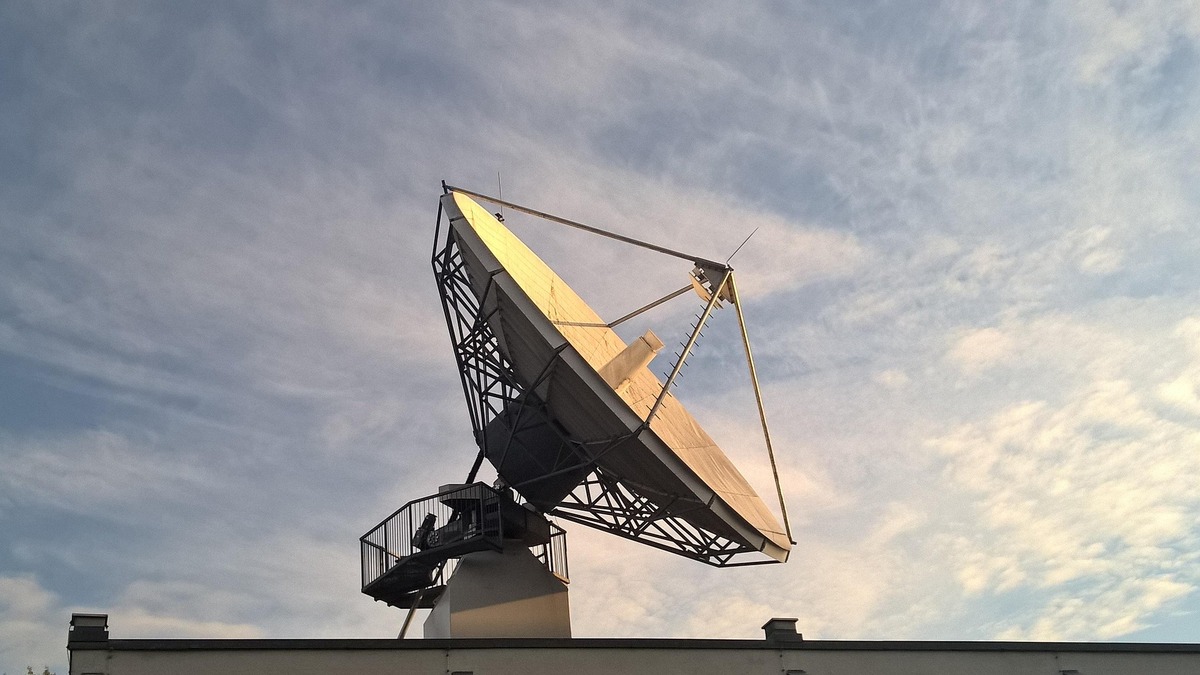
At Zudeals.com, we track the high-frequency innovations that equalize human opportunity. We have officially moved Beyond 6G. The breakthrough of 2026 isn't just a faster tower on a city street; it is the total Integration of Satellite Cloud Networks. By merging Low Earth Orbit (LEO) satellite constellations with decentralized cloud processing, we are now providing gigabit speeds to the most remote corners of the planet. This is the story of how the sky became the ultimate backbone of the global internet.
The 2026 Shift: Why Terrestrial 6G Was Not Enough
By early 2026, it became clear that terrestrial 6G—while offering mind-bending speeds of up to 1 Terabit per second—had a fundamental weakness: range. 6G operates on sub-terahertz frequencies, which have incredibly short waves that are easily blocked by trees, rain, or even a glass window.
1. The Infrastructure Wall
To cover a rural province with pure 6G would require a "micro-cell" tower every 100 meters. The cost of this terrestrial rollout was economically impossible.
2. The Satellite Revolution
The solution arrived through the massive scaling of "Mega-Constellations" like Starlink Gen 3, Amazon Kuiper, and the EU’s IRIS². In 2026, these are no longer just "internet in the sky" providers; they are Flying Data Centers. They have integrated cloud compute nodes directly into the satellites, allowing for "Space-Edge" processing.
4 Pillars of Satellite-Cloud Integration in 2026
The reason we can now achieve gigabit speeds in a remote jungle or at the North Pole is due to four technological pillars that converged this year.
1. Laser Inter-Satellite Links (LISL)
In 2026, satellites no longer need to "talk" to a ground station to pass data.
The Tech: Satellites use high-capacity optical lasers to beam data between one another in the vacuum of space at the speed of light.
The Result: This creates a "Space Mesh" that bypasses the congested and slower terrestrial fiber-optic cables. Data can travel from a remote mine in Australia to a data center in London via the "Satellite Express," often faster than it could through undersea cables.
2. Space-Edge Computing (The Orbital Cloud)
The biggest bottleneck for satellite internet was "latency"—the time it takes for a signal to go up and back down.
The Innovation: In 2026, cloud providers like Microsoft Azure Space and AWS Ground Station have placed "Micro-Servers" directly onto the satellites.
The Impact: If a user in a remote village asks an AI a question, the "thinking" happens on the satellite itself. The request doesn't need to return to Earth to be processed, dropping latency to sub-20ms levels, indistinguishable from a fiber connection.
3. Phased Array "Nano-Terminals"
The bulky "dishes" of the early 2020s are gone.
The Hardware: 2026 utilizes Electronically Steerable Phased Array antennas that are the size of a smartphone. These can be integrated into the roofs of cars, the shells of laptops, or even the fabric of high-tech backpacks.
The Performance: These terminals can lock onto multiple satellites simultaneously, aggregating bandwidth to deliver a consistent 1 to 2 Gigabit per second stream to a single user.
4. AI-Driven Orbital Handoffs
Managing a mesh of 40,000 moving satellites requires a level of coordination that humans cannot manage.
The Orchestrator: Every 2026 satellite terminal uses an AI Beam-Forming Agent. This agent predicts the movement of the constellation and "hands off" the data stream from one satellite to the next with zero packet loss. It’s like a seamless cell tower handoff, but at 17,000 miles per hour.
The ROI: Why Satellite-Cloud is a "Zudeal" for Global Industry
At Zudeals.com, we look at the Unlock Value. When you bring gigabit speeds to a remote area, you aren't just giving them "Netflix"; you are giving them an economy.
| Metric | Traditional Satellite (Legacy) | Satellite-Cloud Integrated (2026) |
|---|---|---|
| Download Speed | 50 - 150 Mbps | 1.0 - 2.5 Gbps |
| Latency | 600ms (GEO) / 40ms (LEO) | < 20ms (Space-Edge) |
| Terminal Size | Large Dish / Fixed | Pocket-sized / Mobile |
| Reliability | Weather-dependent | Mesh-Resilient (Multi-Sat) |
| Usage Case | Basic browsing / Emergency | Real-time AI / 8K VR / Remote Ops |
The "Remote Excellence" Dividend
In 2026, we are seeing the rise of "Digital Nomad Sovereignty." High-value professionals are moving to remote, low-cost regions because they can access the exact same "Compute Power" and "Connection Speed" as they would in Silicon Valley. This is triggering a global real estate shift, where "Nature-Access" is becoming more valuable than "Office-Access."
2026 Market Leaders: The Masters of the Sky
| Provider | Platform | 2026 Tech Highlight |
|---|---|---|
| Starlink (SpaceX) | Starlink Direct-to-Cell | Gigabit speeds delivered directly to standard unmodified 6G phones. |
| Amazon | Project Kuiper + AWS | Full integration of the AWS Cloud into the satellite mesh. |
| Eutelsat OneWeb | Enterprise Sky-Link | Specialized low-latency "Slices" for maritime and aviation. |
| Microsoft | Azure Space | On-orbit AI inferencing and planetary-scale data analytics. |
3 Pillars of Implementing a Satellite-Cloud Strategy
If you are an enterprise leader or a tech-pioneer at Zudeals.com, your move "Beyond 6G" should follow these three standards:
1. Adopt a "Hybrid-Path" Architecture
In 2026, don't rely solely on fiber. The "Zudeal" is to implement Multi-Path Routing. Your office or remote facility should be configured to automatically switch between 5G/6G and Satellite-Cloud based on cost, latency, and reliability. If a terrestrial cable is cut, the AI-router should failover to the sky in milliseconds.
2. Prioritize "Data Sovereignty" in Space
Since your data is now traveling through a global mesh of satellites, security is paramount. In 2026, ensure your satellite provider offers End-to-End Orbital Encryption. Data should be encrypted on your device and only decrypted at your destination, ensuring that even the satellite provider cannot "see" the traffic as it passes through the space-edge nodes.
3. Build for "Low-Latency" Applications
The era of "buffering" is over. Start designing your applications (như real-time VR collaboration or autonomous logistics) to take advantage of the Space-Edge API. By moving your application's "Logic" onto the satellite cloud, you can provide a flawless experience to users regardless of how "off the grid" they are.
Conclusion: The Sky is No Longer the Limit
The integration of Satellite-Cloud networks in 2026 represents the final victory over geography. We have turned the entire atmosphere into a high-speed data bus. We are no longer limited by where we can lay a cable; we are only limited by our ability to look up.
For the Zudeals.com reader, Satellite-Cloud Integration is the ultimate efficiency upgrade. It is a "Zudeal" because it provides "Metropolitan Speed" at "Wilderness Prices." In 2026, the best "office" in the world isn't a cubicle in a skyscraper—it's wherever you decide to turn on your terminal.


