
In 2026, the concept of a "static" cloud server is officially dead. For the past decade, IT departments spent billions of dollars on "over-provisioning"—buying more server capacity than they needed just to ensure they wouldn't crash during a traffic spike. This resulted in a massive "Efficiency Gap," where up to 30% of global server power sat idle, wasting electricity and capital.
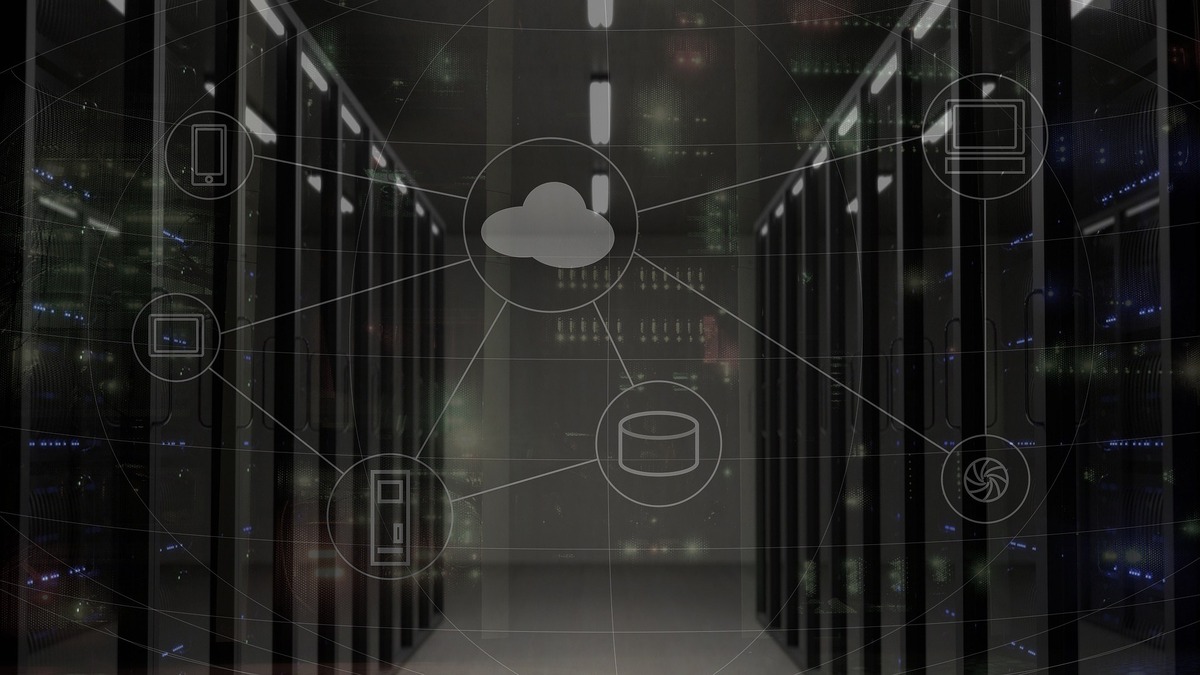
At Zudeals.com, we track the high-utility innovations that maximize ROI. We have entered the era of the AI-Orchestrated Cloud. This is no longer just about "auto-scaling" a few instances; it is a global, autonomous system that reallocates petabytes of data and teraflops of compute power across continents in real-time. In 2026, the cloud has become a living, breathing organism that moves to wherever the demand—and the cheapest energy—is located.
The 2026 Shift: From Manual Management to Agentic Orchestration
The 2026 transition was born out of the "Compute Crunch." As generative AI and real-time physics simulations became standard in every app, the demand for GPUs and TPUs skyrocketed. Cloud providers realized they could no longer rely on human engineers to "balance the load."
1. The Death of the "Fixed Instance"
In the early 2020s, you rented a "Virtual Machine" with fixed specs. In 2026, you rent "Intent-Based Compute." You tell the cloud, "I need to process this 8K video stream with less than 10ms latency," and the AI Orchestrator handles the rest. It doesn't give you a server; it gives you a slice of global power that follows your users as they move.
2. The Rise of "Predictive Provisioning"
Traditional systems were reactive—they added power after the traffic arrived. 2026 Orchestrators are Predictive. By analyzing global events, social media trends, and historical patterns, the AI anticipates a surge in Tokyo or London hours before it happens, "warming up" the local server clusters and migrating data preemptively.
4 Pillars of AI-Orchestrated Clouds in 2026
The 2026 landscape is built on four fundamental technologies that allow the cloud to rearrange itself at the speed of thought.
1. Liquid Infrastructure (Micro-Migration)
In 2026, workloads are "Liquid."
The Tech: Using advanced WebAssembly (Wasm) and container checkpointing, the AI can "freeze" a running application in a Virginia data center and "thaw" it in a Dublin data center in milliseconds.
The Result: If a storm hits the US East Coast and threatens the power grid, the AI Orchestrator moves the entire "state" of the cloud to a safer region without the users ever seeing a "reconnecting" spinner.
2. "Follow-the-Sun" Energy Arbitrage
Compute power is now tied to sustainability.
The Strategy: The AI Orchestrator acts as a Global Energy Trader. It shifts heavy, non-latency-sensitive workloads (like AI model training or data archiving) to regions where renewable energy—solar, wind, or hydro—is currently at its peak and cheapest.
The "Zudeal" Factor: This has reduced the carbon footprint of the cloud by 40% while slashing energy costs for providers, who pass those savings on to the users.
3. Neural Load Balancing (Layer 8 Intelligence)
Traditional load balancers look at "Traffic." 2026 Orchestrators look at "Complexity."
The Intelligence: The AI analyzes the type of code being run. If it sees a task that is heavy on "matrix multiplication" (AI tasks), it routes it to specialized NPU (Neural Processing Unit) clusters. If it's a standard database query, it stays on cheaper, general-purpose CPUs. This "Semantic Routing" ensures that every watt of power is used by the hardware best suited for the task.
4. Self-Healing Topology
In 2026, the cloud fixes itself before a human can even get a notification.
The Mechanism: If the AI detects a degrading hardware component—like a failing SSD or a fluctuating power supply—it "evacuates" all workloads from that specific rack and reroutes the traffic through the mesh. The cloud remains 100% operational even as physical parts fail underneath it.
The ROI: Why AI Orchestration is a Financial "Zudeal"
At Zudeals.com, we look at the Utilization Rate. In 2026, "Idle" is a dirty word.
| Metric | Managed Cloud (Legacy) | AI-Orchestrated Cloud (2026) |
|---|---|---|
| Server Utilization | 15% - 25% | 85% - 95% |
| Cost of Over-provisioning | 30% of Cloud Bill | Near Zero |
| Latency Management | Manual / Static | Autonomous / Dynamic |
| Energy Source | Grid-Dependent | Renewable-Focused (Arbitrage) |
| Uptime Guarantee | 99.99% (Hard Caps) | 99.9999% (Self-Healing) |
The "Zero-Waste" Dividend
By maximizing utilization, cloud providers have effectively tripled their capacity without building new physical buildings. For the business owner, this means the price of "High-Performance Compute" has dropped significantly, making complex AI tools accessible to startups that previously couldn't afford the "Cloud Tax."
2026 Market Leaders: The Masters of the Mesh
| Provider | Platform | 2026 Tech Highlight |
|---|---|---|
| Google Cloud | Vertex Orchestrator | Real-time TPUs reallocation for global AI agents. |
| AWS | Lambda Autonomous | "Zero-Server" architecture that scales to zero instantly. |
| Azure | Grid AI | Integrated with global weather data for energy-optimized routing. |
| Cloudflare | Workers AI Mesh | Localized "Edge" orchestration for sub-5ms response times. |
3 Pillars of Implementing an Orchestrated Strategy
If you are a CTO or a lead architect in 2026, your strategy should follow these three standards:
1. Design for "Statelessness"
To take advantage of an AI Orchestrator, your code must be able to move. Use Stateless Architectures and externalize your data persistence. In 2026, if your app is "anchored" to a specific server, you are paying a "Rigidity Tax" that your competitors are not.
2. Set "Value-Based" Constraints
Instead of setting "Instance Limits," set "SLA Constraints." Tell the Orchestrator your budget and your required performance level. Let the AI decide where and how to run the code. In 2026, the best "Zudeal" is the one where the AI finds the cheapest path to your performance goal.
3. Implement "Green-First" Tags
Many 2026 Orchestrators allow you to tag workloads as "Carbon-Sensitive." For tasks that aren't time-critical, allow the AI to wait for a "Renewable Surge" in a specific region. This not only lowers your bill but boosts your company's ESG (Environmental, Social, and Governance) score, which is a key metric for 2026 investors.
Conclusion: The Cloud Becomes the Electricity
The rise of AI-Orchestrated Clouds in 2026 represents the final stage of "Computing as a Utility." We have moved from "Servers" to "Instances" and finally to "Fluid Power." We no longer care where the computer is; we only care that the power is there when we need it, at the lowest possible cost and carbon footprint.
For the Zudeals.com reader, AI orchestration is the ultimate efficiency upgrade. It is a "Zudeal" because it converts "Technology Overhead" into "Intelligent Energy." In 2026, the most successful companies aren't the ones with the most servers—they are the ones with the smartest orchestrator.


